
As deputy governor, Patel headed the RBI panel to draft the monetary policy report, which became the basis of the ongoing reforms at the apex bank
Under Urjit Patel, the then RBI Governor, the central bank had a habit of making complete about-turns on various issues, including electoral bonds and digital payments, former finance secretary Subash Chandra Garg said in his book titled 'We Also Make Policy: An Insider's Account of How the Finance Ministry Functions.' Citing some instances of about-turns by the then RBI Governor Patel, Garg in his book said, RBI had done so on the electoral bond issue and it had so in case of setting up of Payments Regulatory Board (PRB). RBI also made unilateral decisions like ordering complete data localization for participation in the payment system, Garg wrote in the book which will hit the stands on October 1.

Unless Dr Urjit Patel starts clearing the balance sheets of banks, the investment cycle will not start. Unless the clog in the drain is cleared, further lending cannot happen. If further lending doesn't happen, the investment cycle also will not happen, writes M R Venkatesh.

Rajan said that even though inflation has breached the 6 per cent mark as against the RBI target of getting it down to 5 per cent by March 2017, the price rise scenario will ebb in future

The RBI governor-designate may be economical with spoken words, but is known for his sharp and critical writings
Highly-placed sources in the government say that none of the senior ministers had any inkling of Patel's resignation
This time the all-powerful interest-rate setting panel, whose constitution was notified by the government on Thursday, will take call on interest rate. But that's not the only change. The Reserve Bank of India has also decided to change the timing of announcement of its policy review, due next Tuesday, to mid-afternoon.
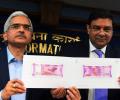
PAC summons RBI Governor Urjit Patel, Finance Secretary Ashok Lavasa and Economic Affairs Secretary Shaktikanta Das.

Infrastructure and inflation targeting are expected to be top priorities for the new Reserve Bank of India governor, says A V Rajwade.

The resignation is sure to create more political firestorms for the government as it comes on the eve of the winter session of Parliament where the Opposition has already made it clear to the treasury benches that infringing on the RBI autonomy would be a big talking point for them.
Chetan Ghate, Pami Dua and Ravindra Dholakia have been appointed for 4 years

The first task before him is to get used to the idea of working with the Monetary Policy Committee

RBI lowered economic growth for the current fiscal to 6.9 per cent from the previously projected 7.1 per cent, but saw it bouncing back in a big way to 7.4 per cent in 2017-18.

Heading to the third year, will Urjit Patel be busy firefighting a currency crisis? Almost no governor of the RBI managed to evade it and Patel perhaps knows it.

The RBI governor, who made a presentation about the state of the economy as well about the world economy to the 31-member Parliamentary Standing Committee on Finance, stayed clear of controversial questions like government invoking special powers.

There was no word on whether or when Patel would be talking to the media about his priorities and plan of action as head of Mint Street
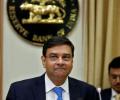
Governor Urjit Patel and his deputies spoke to the media about the central bank's decision to raise the repo rate.

investors will look to the new governor to continue the banking sector clean-up with the same urgency as Mr Rajan, who was targeting fully cleaned-up and provisioned balance sheets by March 2017

Rupee, bonds may see knee-jerk reaction, as Urjit Patel is considered an inflation warrior
Fitch said the full implications of Patel's resignation will only become clearer once there is some indication of the RBI's policy approach under his replacement, Shaktikanta Das
Standing committee on finance to also focus on RBI autonomy and citizen's rights.

Shaktikanta Das will demit the office on Tuesday after completing six years as the 25th Governor of the Reserve Bank of India. Revenue Secretary Sanjay Malhotra will replace him as the 26th Governor. He was appointed as the Governor on December 12, 2018, after the abrupt exit of Urjit Patel.

The government on Monday appointed Revenue Secretary Sanjay Malhotra as the 26th Governor of the Reserve Bank of India. The Appointments Committee of the Cabinet cleared Malhotra's name, who has been appointed as the RBI Governor for three years, starting Wednesday. Malhotra, a 1990 Batch Rajasthan Cadre IAS Officer, will replace Shaktikanta Das, whose tenure ends on Tuesday (December 10, 2024).
The government has invited applications for the post of deputy governor of the Reserve Bank of India (RBI) from interested candidates with at least 25 years of experience and below 60 years of age as on January 15, 2025. One of the deputy governors, Michael Patra's current term will end on 15 January. The last date of submission of applications is November 30, 2024.

A committee headed by Patel recommended retail inflation targeting and a monetary policy committee.

Urjit Patel panel wanted all members to be appointed by RBI

A lot depends upon the composition of the monetary policy committee.

There are respected names arguing both for and against this recommendation of the Urjit Patel committee.
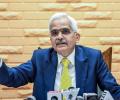
P K Mishra, a retired IAS officer of the Gujarat cadre, is currently serving as the principal secretary to the prime minister.
Focus on inflation, higher CPI projection dampen bond market mood.

The MPC headed by RBI Governor Urjit Patel said that the recent excise duty cut by the government on petrol and diesel will help contain inflation.
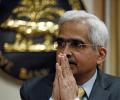
The government has extended the term of Reserve Bank of India Governor Shaktikanta Das by another three years upto December 2024, according to an official order.
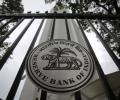
The government has proposed "drastic changes" in the rules framed to retune the composition of three committees of the RBI: Board for Financial Supervision, the Board for Payment and Settlement Systems and the Committee of the Central Board.

'If Urjit Patel had resigned after the five-state elections results people would have taken a different view. So this was the right time for him to resign.' 'He rightly resigned as he felt the differences with the government were not getting settled.'
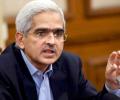
The December meeting of the Reserve Bank of India's (RBI's) six-member Monetary Policy Committee (MPC) will start on Wednesday even as there is no clarity on whether Governor Shaktikanta Das, the chair of the panel, will continue in office after his term ends next week. The outcome of the meeting will be announced on Friday by Das at 10 in the morning.
The chairman of Parliament's Public Accounts Committee, K V Thomas, on Monday said a meeting with finance ministry officials has been deferred to February 10 in view of the Budget preparations.
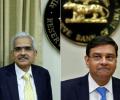
When did Urjit Patel really resign? When did Shaktikanta Das get the mandate to take over as RBI governor?

Perhaps because the Modi government had some differences of opinion with two of the economist governors (one of whom was appointed by the Manmohan Singh government), there is a view that its political leadership prefers a civil servant to head the RBI, notes A K Bhattacharya.
RBI said the outlook for economic growth for 2016-17 has turned uncertain after the unexpected loss of momentum by 50 basis points in Q2 and the effects of the withdrawal of banned notes
The committee set up under Urjit Patel to revise the policy framework needs to re-examine the Reserve Bank's approach to monetary stability.
 © 2026 Rediff.com - Advertise with us - Disclaimer - Privacy Policy - Sitemap - Feedback - About us - Terms of use - Grievances